
Try this simple chocolate experiment
What you smell shapes what you taste

Many people tell me they don’t feel confident tasting dark chocolate. They assume they won’t notice much, or that tasting requires a trained palate. Some expect higher percentage chocolate to taste simply bitter.
In practice, most people discover the opposite. With a little attention, they begin to notice far more than they expect.
Your tongue can only sense a few basic tastes. Sweet, sour, salty, bitter, and savory. Most of what we describe as flavor actually comes from smell. When chocolate melts, aromatic compounds travel from the back of your mouth up into your nose. Your brain combines smell and taste, and that becomes flavor.
This connection is believed to be part of how humans learned to distinguish safe foods from harmful ones. Pleasant aromas often signaled nourishment. Unpleasant smells warned us to be cautious. Over time, smell and taste began working together as one system.
You can experience this yourself.

Place a small piece of dark chocolate on your tongue and gently pinch your nose closed while it melts. With smell blocked, you will likely notice only basic sensations such as sweet or bitter. The more specific flavors are difficult to detect.
Now release your nose and breathe normally. As aroma reaches your nose, the chocolate becomes more recognizable. You may notice fruit, nuts, earth, or another familiar note. Nothing in the chocolate changed. Only your ability to smell it.
Even sweetness is affected. In studies where people tasted a sweet solution while pinching their noses, they often described it as less sweet. Aroma helps your brain recognize sweetness more fully. When smell is limited, both flavor and sweetness seem reduced.
Tasting becomes easier when you compare chocolates side by side. Differences in aroma, melt, and finish become clearer. Discussion helps too. When someone shares what they notice, it often brings your own perception into focus.
Imagine sitting down with three small pieces of chocolate in front of you. You taste one slowly. Someone mentions citrus. Another notices how long the flavor lingers.
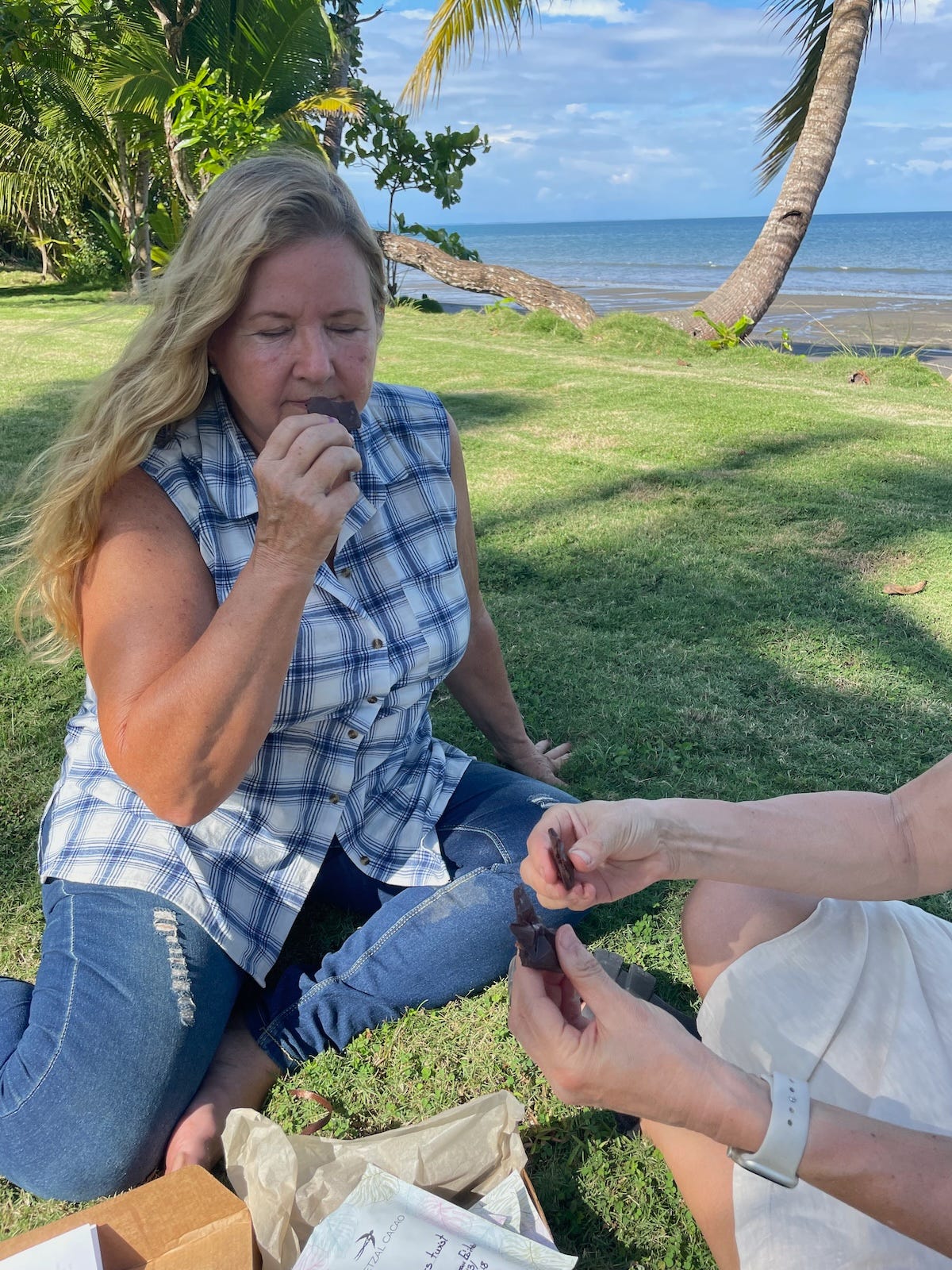
As you move to the next piece, you begin to recognize those differences yourself. Confidence builds naturally. You are not trying to be right. You are simply noticing.
This is why tasting together can be so helpful. But you can also begin right where you are.
Try this at home with a small piece of dark chocolate. Taste slowly. Pay attention to what changes as it melts. Notice what appears when you breathe normally. There is no right answer. Only observation.
If you try this, I would love to hear what you notice. Simply reply and tell me what came forward for you. Was there a flavor you didn’t expect? Did the sweetness change? Did the aroma surprise you?
Warmly,
Lyn Bishop
P.S. Many people are surprised by how much they can detect once they slow down. If you try this simple tasting, I would love to hear what you experience.
Lyn Bishop grows cacao at Finca Las Heliconias in Chiriquí Province, Panama, where she founded Quetzal Cacao, an organic tree-to-bar chocolate brand.