
Where Chocolate Begins
A quiet moment on a cacao farm in Panama

This morning I was standing at the worktable while a cacao pod was opened, watching as the machete moved through the thick skin with a familiar, practiced motion and the pod gave way in two clean halves, revealing the seeds inside, packed closely together and covered in a pale pulp that still belongs entirely to the fruit and gives no real indication yet of chocolate.
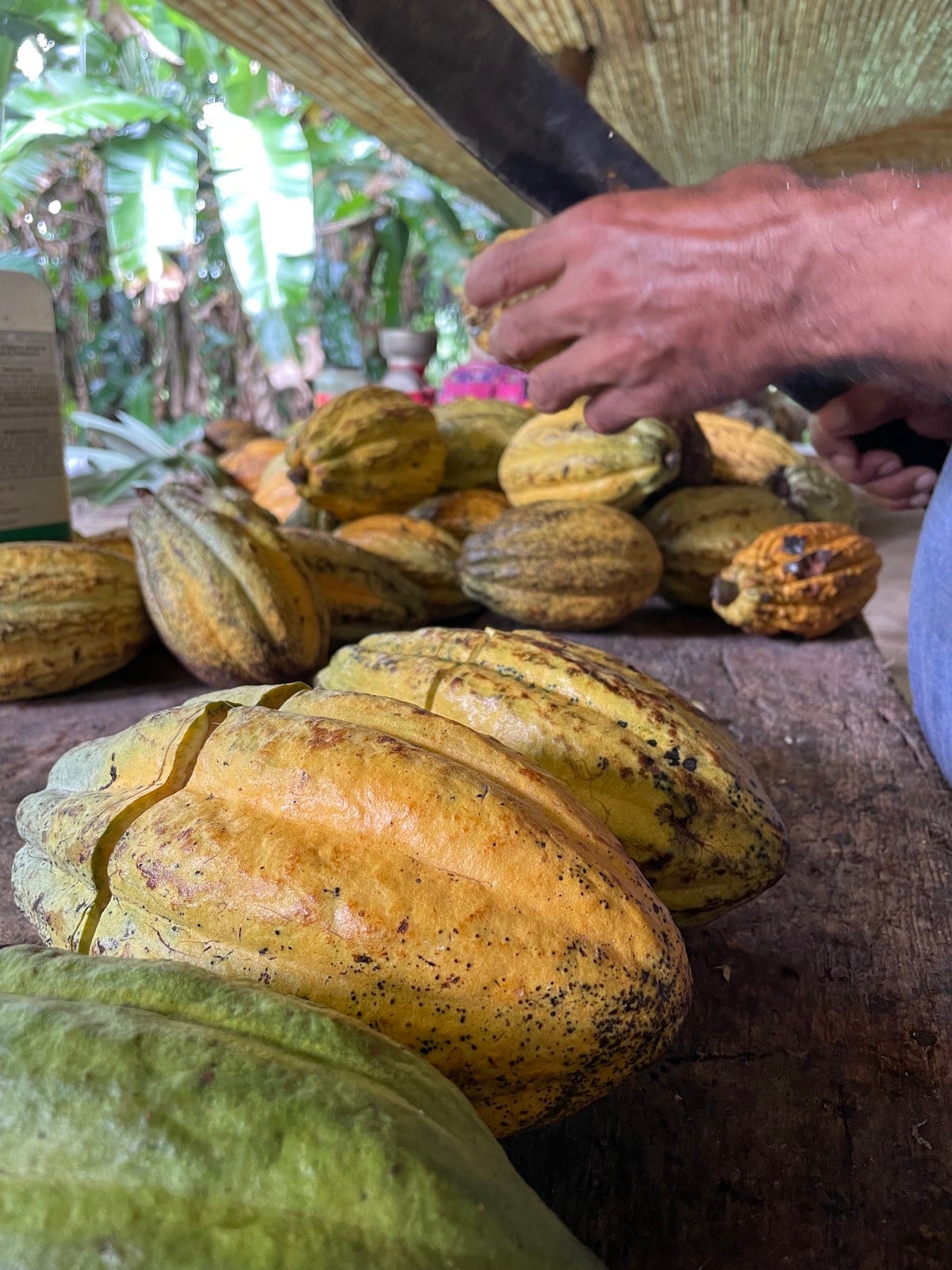
It is a simple moment, and one I have seen many times now, but I noticed myself pausing again, not out of surprise but out of recognition, because there is something about seeing the inside of a cacao pod that gathers the whole process into one place before anything begins to change.
For most of my life, chocolate existed for me at the end of a long chain of events that I did not think much about, something finished and complete, something chosen and enjoyed without any real sense of where it had begun or what had shaped it along the way, and even when I first began working with chocolate, my attention went naturally to the making, to the grinding, the texture, the balance, and the final form that would eventually be shared.
It took time, and living here with the trees through many seasons, before my attention began to move backward, toward the farm itself, toward the conditions that surround the trees, and toward the quiet accumulation of decisions and relationships that shape the cacao long before it ever reaches the stage where it can be made into chocolate.
This is something that is perhaps easier to understand in Panama through coffee, where people have already experienced how a cup can reflect the place it was grown, the variety that was chosen, and the way it was handled after harvest, not as a single dramatic factor but as a series of small, consistent acts of care that carry forward into what is finally tasted.On our farm, Finca Las Heliconias in Chiriquí Province, we grow cacao for Quetzal Cacao, our small organic tree-to-bar chocolate brand in Panama, and it has been through working with these trees, season after season, that this understanding has taken shape.
Cacao moves in a similar way, although it asks for a different kind of attention, one that unfolds more slowly and often more quietly, because what happens on the farm does not announce itself in obvious ways, and yet over time it becomes clear that the way a tree is pruned, the amount of light and air that moves through the canopy, and the way the beans are handled after the pod is opened all contribute to something that cannot be fully changed later.
On our farm, Finca Las Heliconias in Chiriquí Province, we grow cacao for Quetzal Cacao, our small organic tree-to-bar chocolate brand in Panama, and it has been through working with these trees, season after season, that this understanding has taken shape.
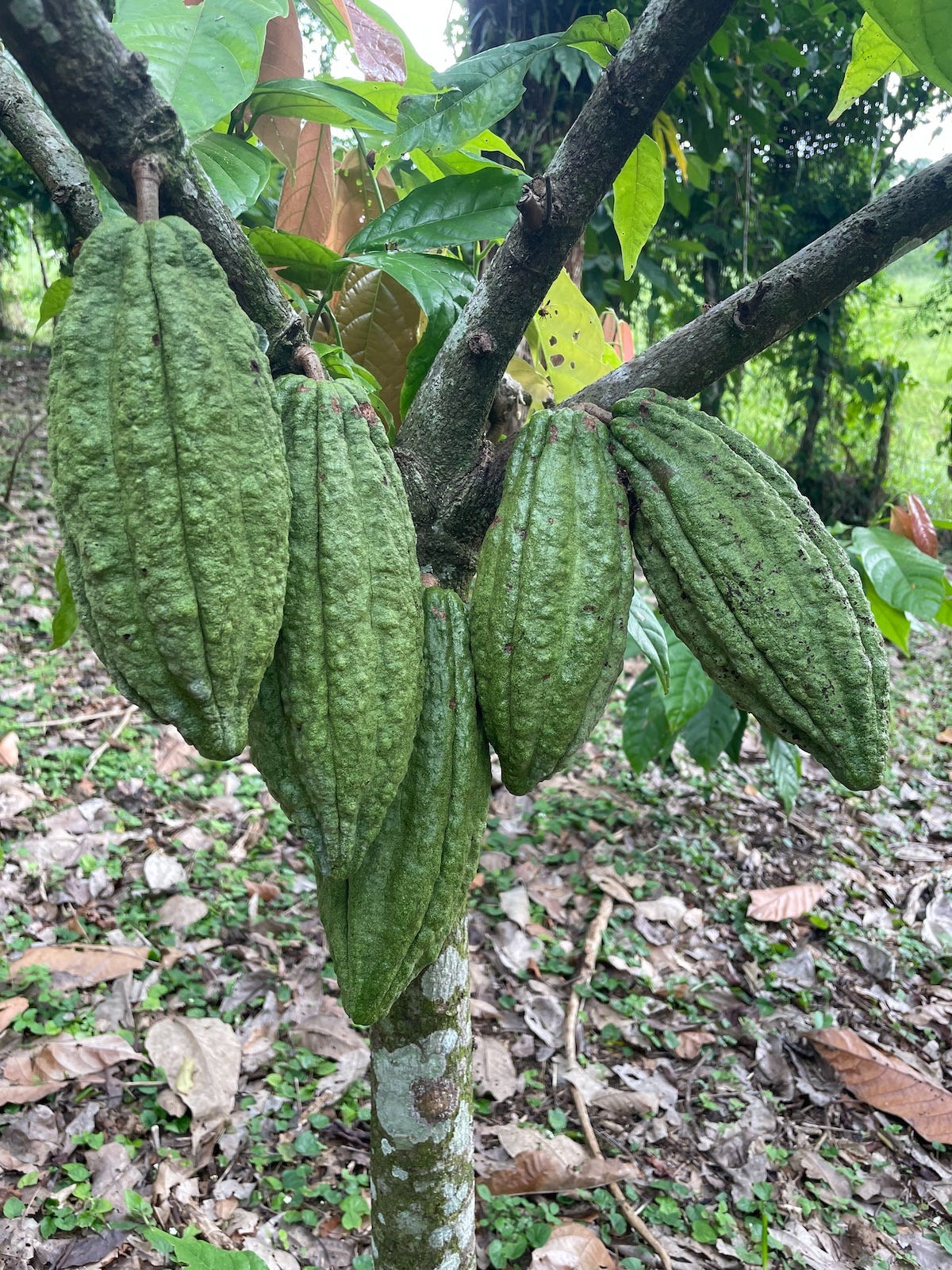
Cacao itself has not always held a steady place in this region, and older farms still carry traces of a time when it was more widely grown before other crops took precedence, while in places like Bocas del Toro it has remained more continuous, part of the daily work of families who have stayed close to it over generations, and now, in quieter ways, it seems to be returning again in certain areas, not as something imposed but as something being chosen.
Standing there this morning with the pod open on the table, I was aware that what I was looking at was still at the very beginning of its transformation, and at the same time already complete in its own way, holding within it everything that would follow, shaped by the tree, the land, and the work that had brought it to that point.
It is not a dramatic realization, and it does not arrive all at once, but it settles in slowly, until it becomes difficult to think of chocolate as something that begins anywhere other than here.
Lyn Bishop grows cacao at Finca Las Heliconias in Chiriquí Province, Panama, where she founded Quetzal Cacao, an organic tree-to-bar chocolate brand.